
Stunning Eclectic Apartment Living Room Ideas 2026
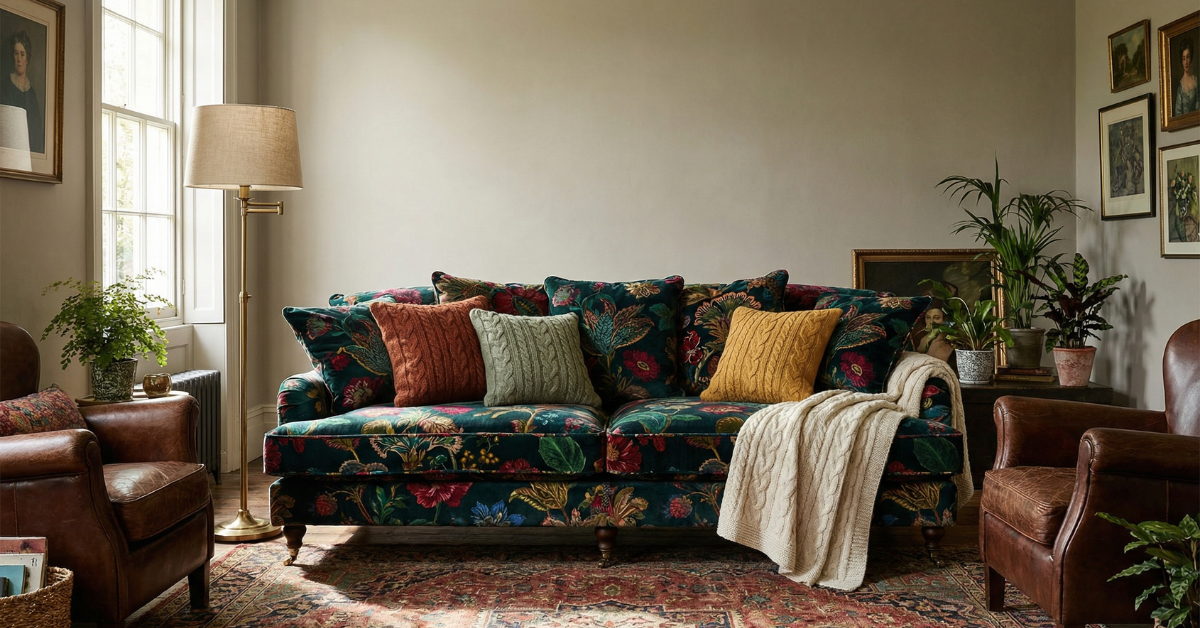
You know that feeling when you go to somebody’s house or apartment and, within minutes, you’re like, “This person has LIVED in here”? That is the beauty of eclectic design. It’s not about trends or matchy-matchiness — it’s about creating a living room that feels like the visual autobiography of your life, where each piece makes its own statement, and somehow all of them work together. Let’s dive into 25 ways to make your living room eclectic in the best possible way.
If you’ve ever learned the despicable ‘staying in your lane’ skills of one type of design style, forget them. Your living room is about to be the most fascinating conversation you’ve ever been a part of, told in furniture and art and the exciting nonsense of throwing things together that “shouldn’t” work but completely do.
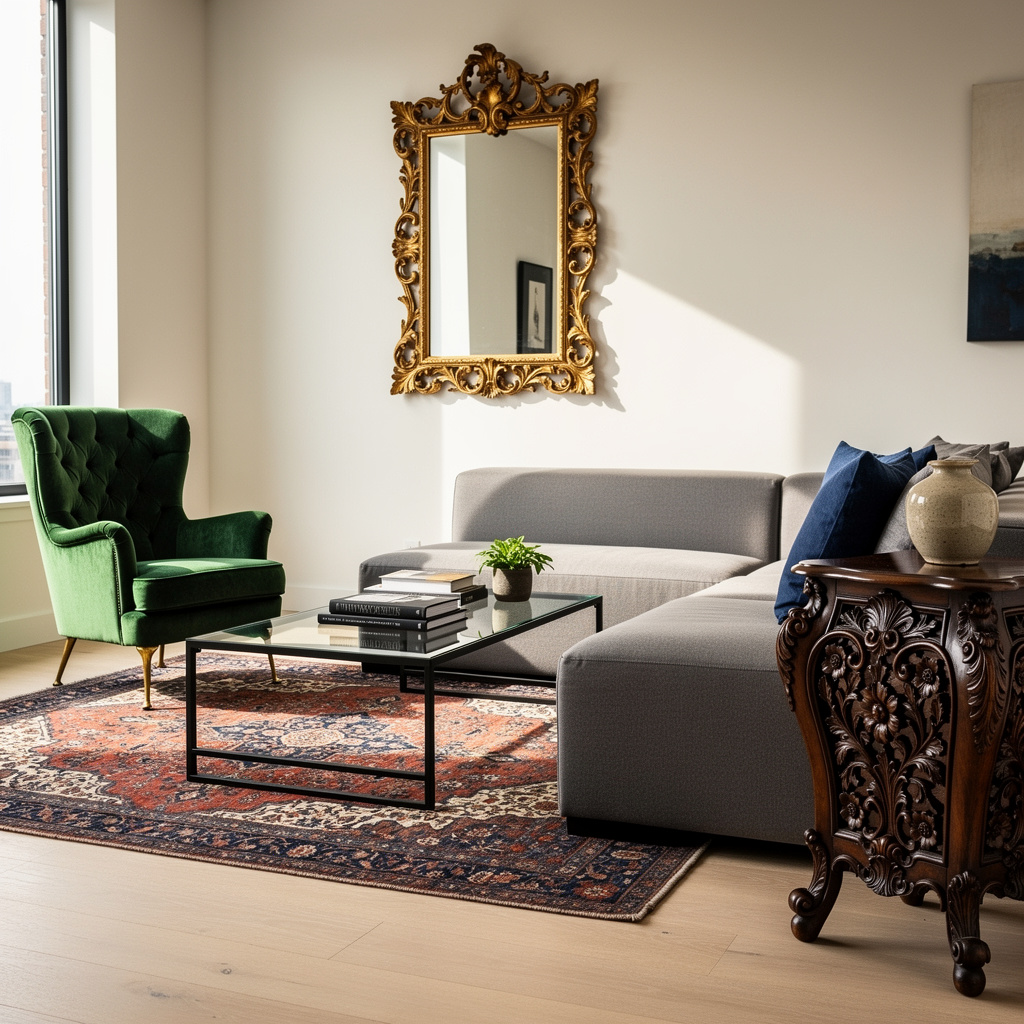
1. Mix Old and New Furniture Thoughtfully
Furniture from different times can share a room. Mixing old with new works well when done right. The key lies in how you pair them together.
Here’s how:
- Pick one era to dominate. If you love modern stuff, make that 70% of your room. Then add 30% vintage for character.
- A different kind of charm shows up when old meets new. Picture a smooth modern sofa beside a worn wooden table from another time. What stands out isn’t one piece – it’s how they sit together. Opposites bring balance without trying too hard.
- Put a simple glass coffee table on top of your grandmother’s Persian rug. Old + new = perfect.
- Keep the wood tones similar across different pieces. This helps everything feel connected.
Why it works: Your brain likes both familiar and surprising things. Too much vintage feels like a museum. Too much modern feels cold. Mix them, and you’ve got something special.
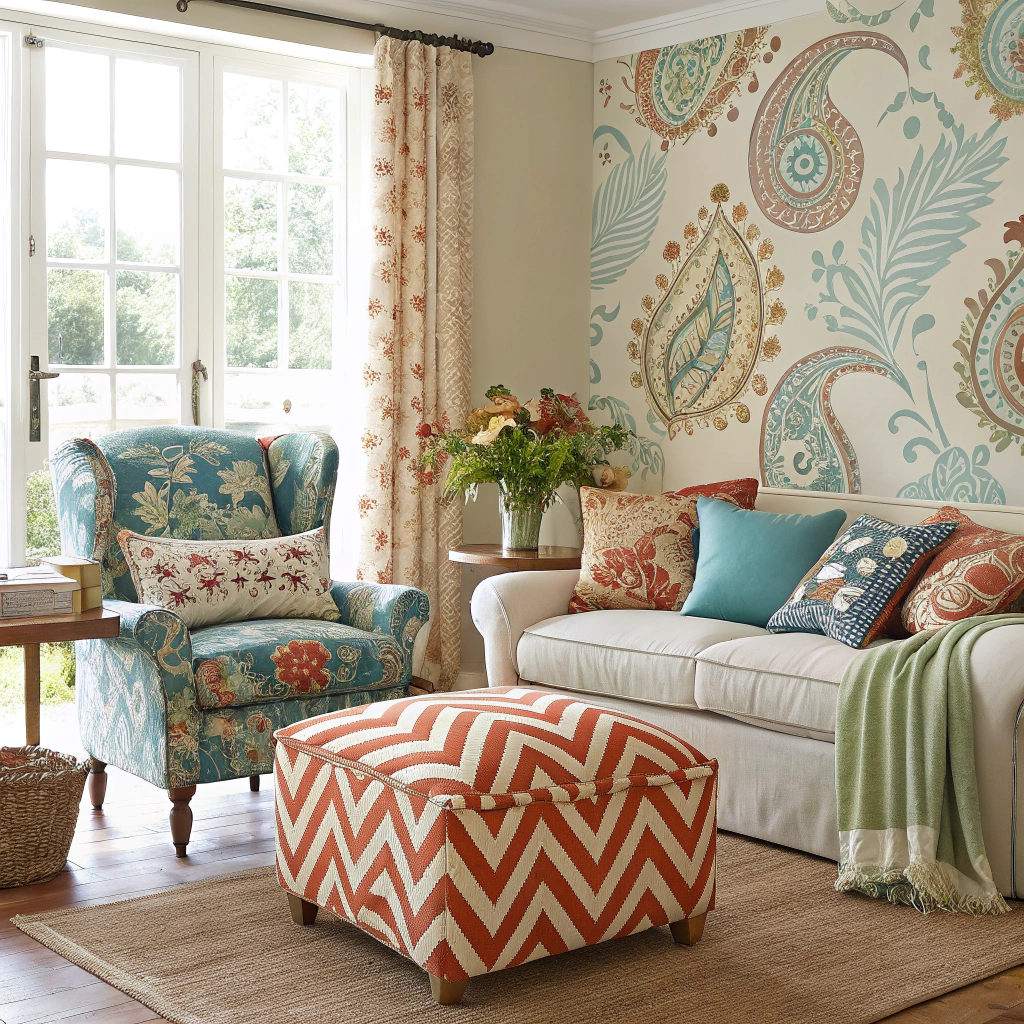
2. Don’t Be Afraid to Combine Prints
You’re probably wondering – could that seem wild? It won’t, so long as one small guideline is used.
Start here:
- Pick one bold, patterned piece first. Maybe a chair with an interesting print.
- Add patterns in different sizes. Big floral print + tiny dots = good. Two big florals = chaos.
- Make sure your patterns share at least two colors. This ties them together.
- Mix flowery patterns with geometric ones. They balance each other out.
- Use solid colors in between to give your eyes a break.
The easy formula: One large pattern, one medium pattern, one small pattern. That’s it.
3. Create a Gallery Wall That Tells Your Story
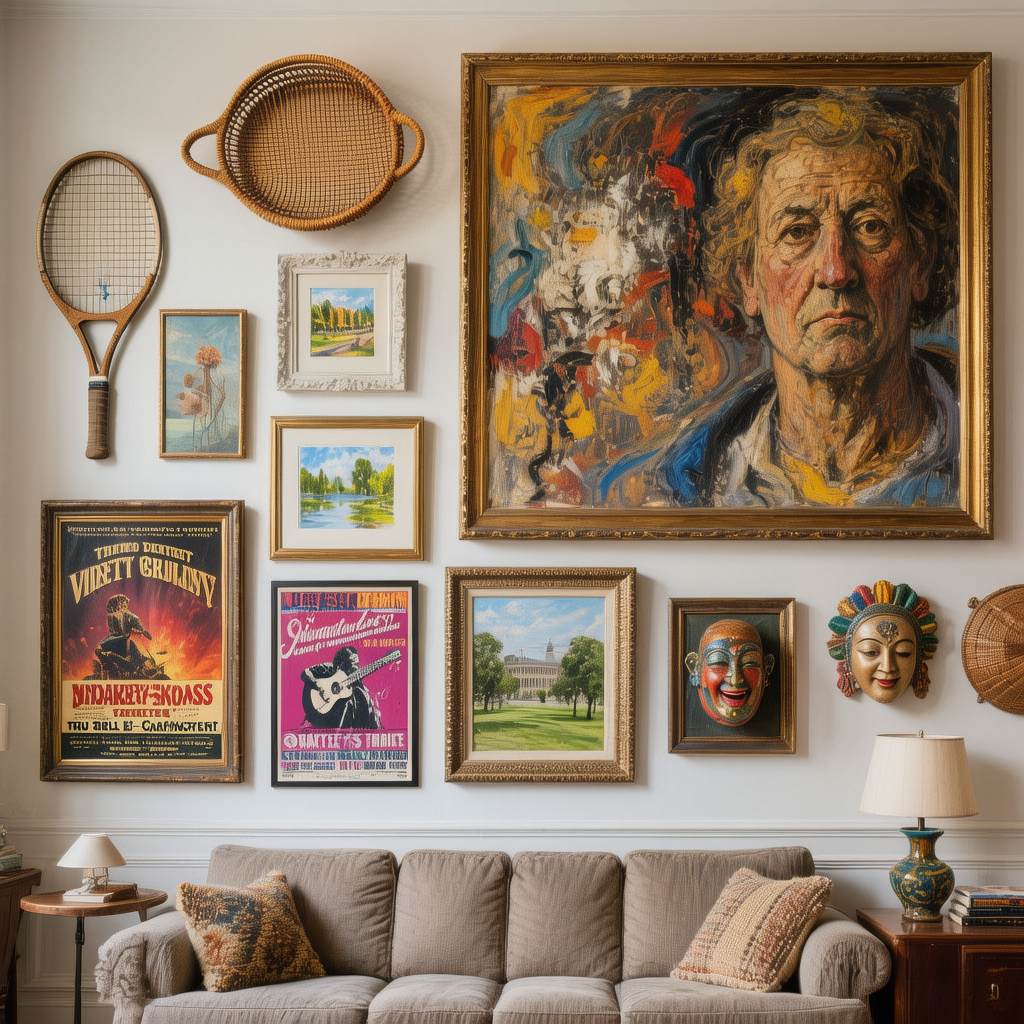
Blank walls are boring. Gallery walls are personal and interesting. But they can go wrong fast if you’re not careful.
Do this:
- Mix different sizes. Tiny postcard next to huge painting? Yes.
- Don’t just use frames. Add a ceramic plate, a woven basket, whatever you love.
- Use different frame colors and materials. All matching frames = boring.
- Leave 2-3 inches between each piece. They need breathing room.
- Make sure 60% of your pieces share one color. This keeps it from looking messy.
Pro tip: Lay everything on the floor first. Move it around until it looks good, THEN hang it up.
4. Layer Textiles Like You’re Dressing Your Room
Your living room works like an outfit. Layering happens there, too, just different. Works that way because it helps things feel complete without looking forced.
Try this:
- Throw a cool blanket over your couch arm.
- Stack different patterned pillows together.
- Layer two rugs on top of each other. Start with a plain one, add a colorful one on top.
- Mix textures: smooth silk with rough linen with soft velvet.
Easy rule: 70% plain or subtle patterns, 20% medium patterns, 10% bold, crazy patterns. This keeps it interesting without overwhelming.
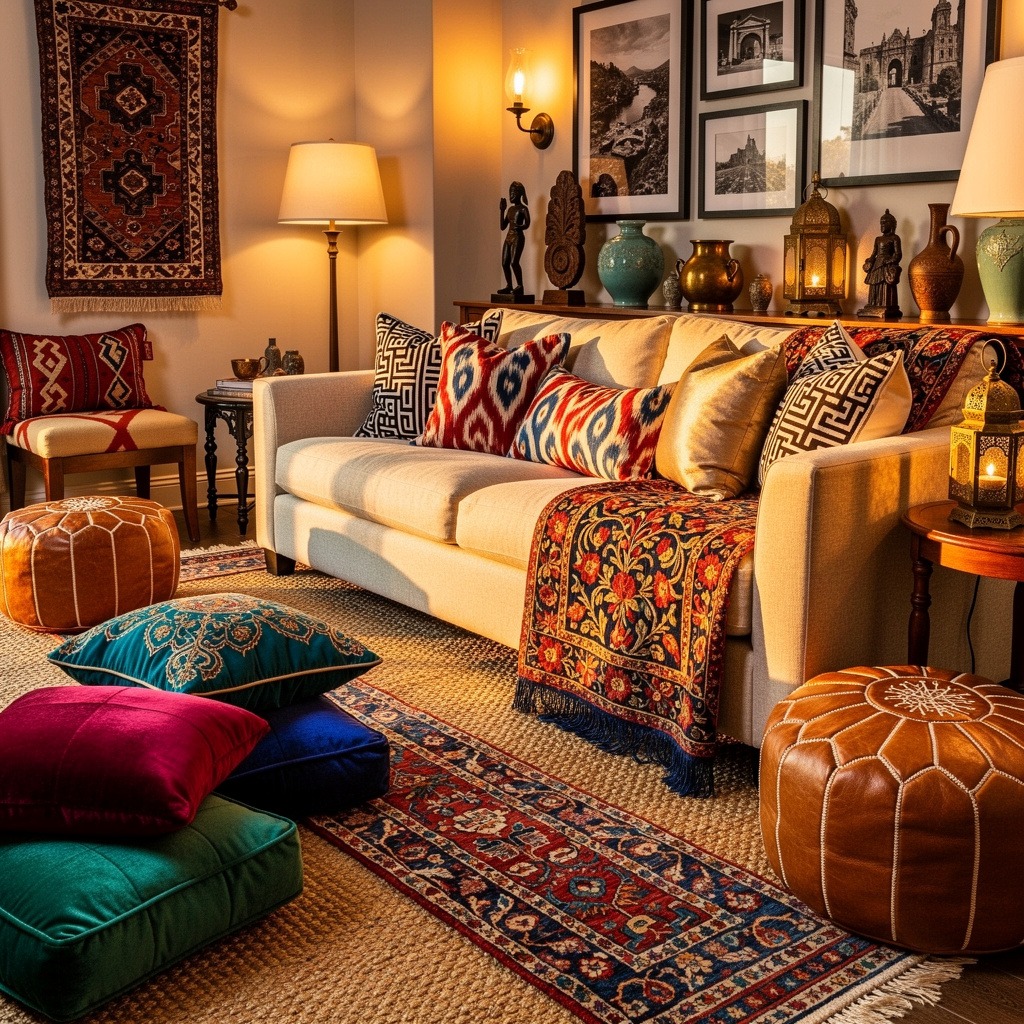
5. Get Creative With Lighting
Matching lamps are safe. But safe is boring. Your lights should have personality.
Ideas:
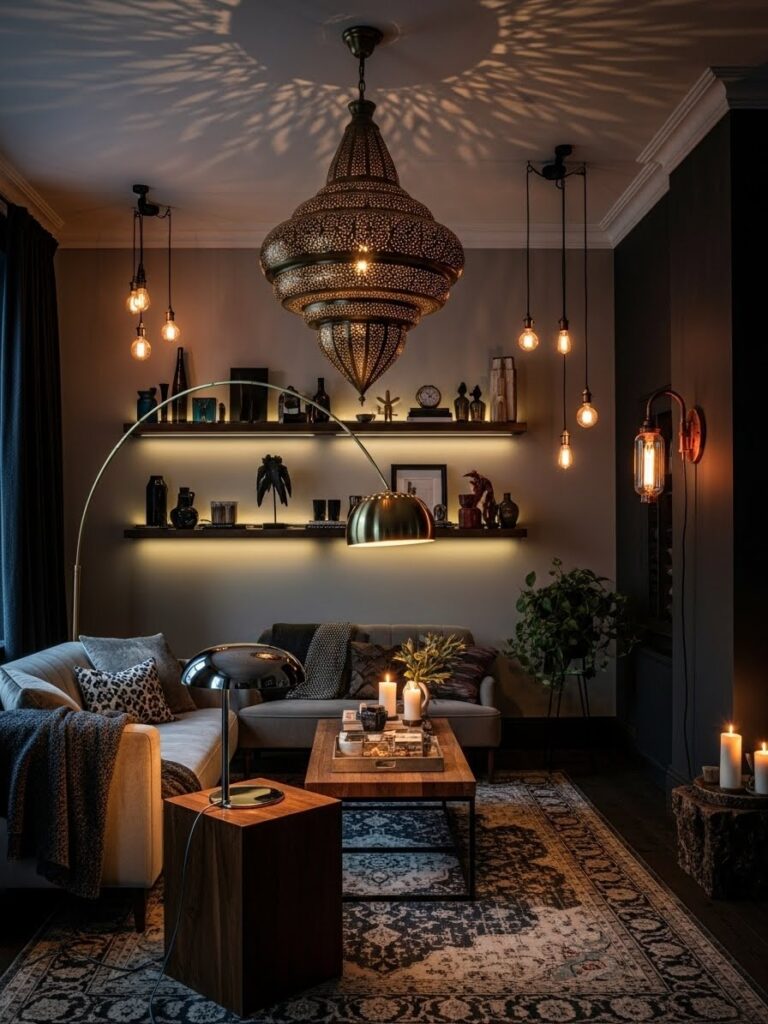
- Hang one showstopper light as your main piece. Something that makes people look up.
- Mix metals. Brass lamp + chrome lamp + copper lamp = more interesting than three matching lamps.
- Try Edison bulbs at different heights. They look cool and give great light.
- Add a weird vintage lamp somewhere. It becomes a conversation piece.
Remember: Keep your main light fixture somewhere between eye level and the ceiling. Not too low (you’ll hit your head) and not too high (it disappears).
6. Your Seating Doesn’t Need to Match
Matching furniture sets are what your parents did. You’re cooler than that.
Mix it up:
- Start with one main couch.
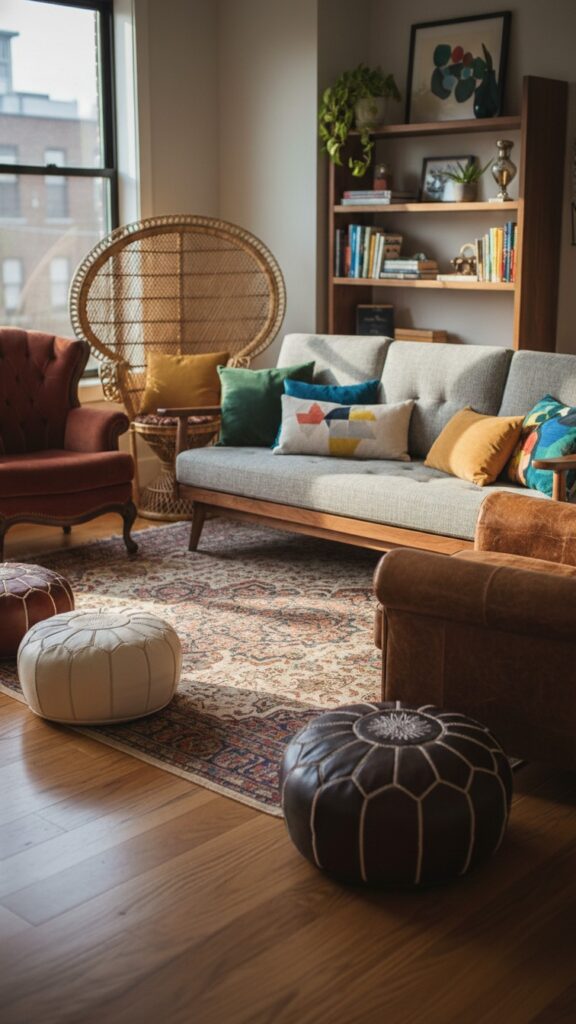
- Add a chair in a totally different style. Modern couch + vintage chair works great.
- Throw in a leather piece somewhere.
- Add floor cushions for when more people come over.
The trick: Even though nothing matches, give them something in common. Maybe they’re all the same color family, or they all have similar throw pillows. This makes “random” look “intentional.”
7. Arrange books as decorative pieces
Pages hold more than words. A glance can reveal shapes, colors, space between lines.
Get creative:
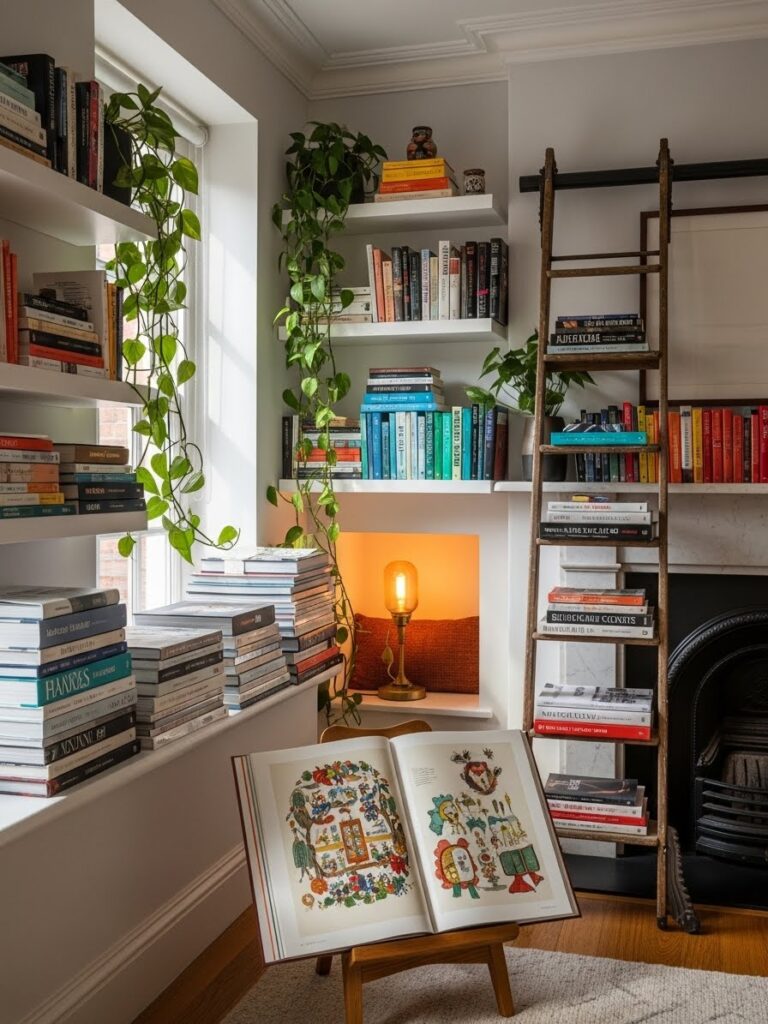
- Slide thick novels flat across the ledge by your window.
- Line up your books according to their cover shades. It works – try it sometime.
- Start by tilting books gently toward the wall. Place greenery just ahead of their spines. A soft slope keeps everything steady. Life grows forward while knowledge leans back.
- A single open book rests on a wooden stand, its pages turned to reveal delicate ink drawings beneath soft light.
Here is a basic tip that works well. Arrange books in sets of three or five. For whatever reason, it ends up looking more pleasing than uneven groupings.
8. Show Off Your Weird Stuff
All those random things you’ve collected? Display them. That’s what makes your space yours.
Display ideas:
- Put different height vases together on a table.
- Mix thrift store art with new prints on the wall.
- Group similar items: all white dishes on one shelf, all brass stuff on another.
- Layer smaller things in front of bigger things.
The balance: 60% should be your main style, 30% supporting stuff, 10% random weird things you love. This keeps it interesting without being chaotic.
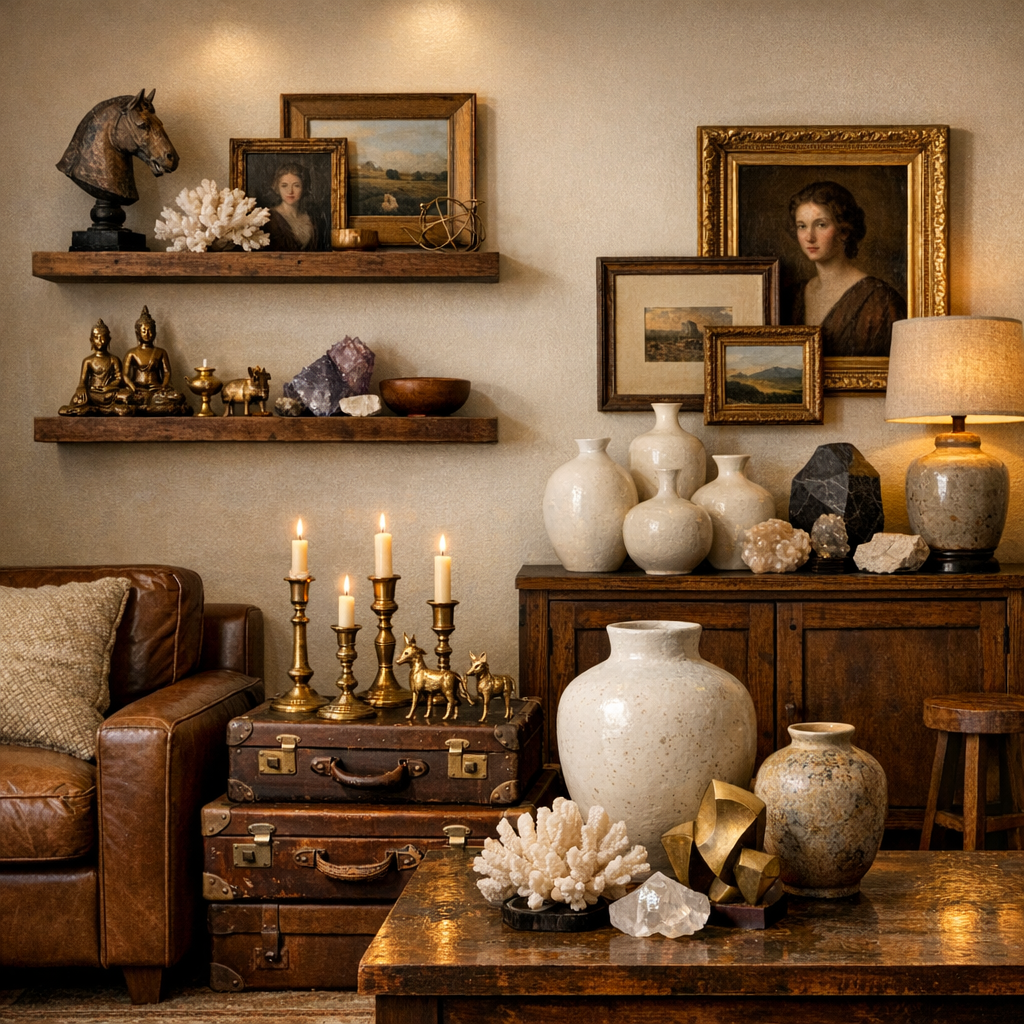
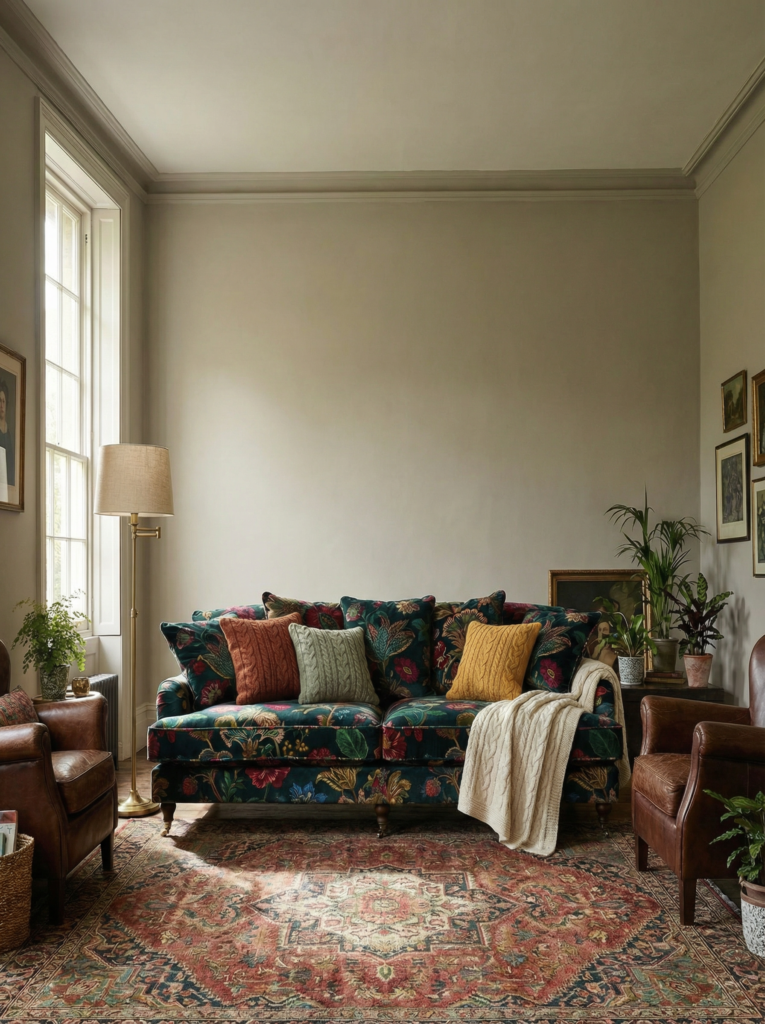
9. Choose a Bold Couch
Now and then, a single thing stands alone. That spot belongs to a velvet sofa with patterns. It takes up space without asking twice.
Style it:
- Pull out colors from the print for your throw pillows.
- Add a chunky knit blanket over one arm.
- Keep the wall behind it simple. Let the couch be the star.
- Add simpler chairs nearby so it doesn’t feel like too much.
Placement tip: Position it where sunlight touches throughout the day. Because velvet shifts when lit from various angles – this change isn’t a flaw, it’s a feature. The way it appears depends on how light moves across it.
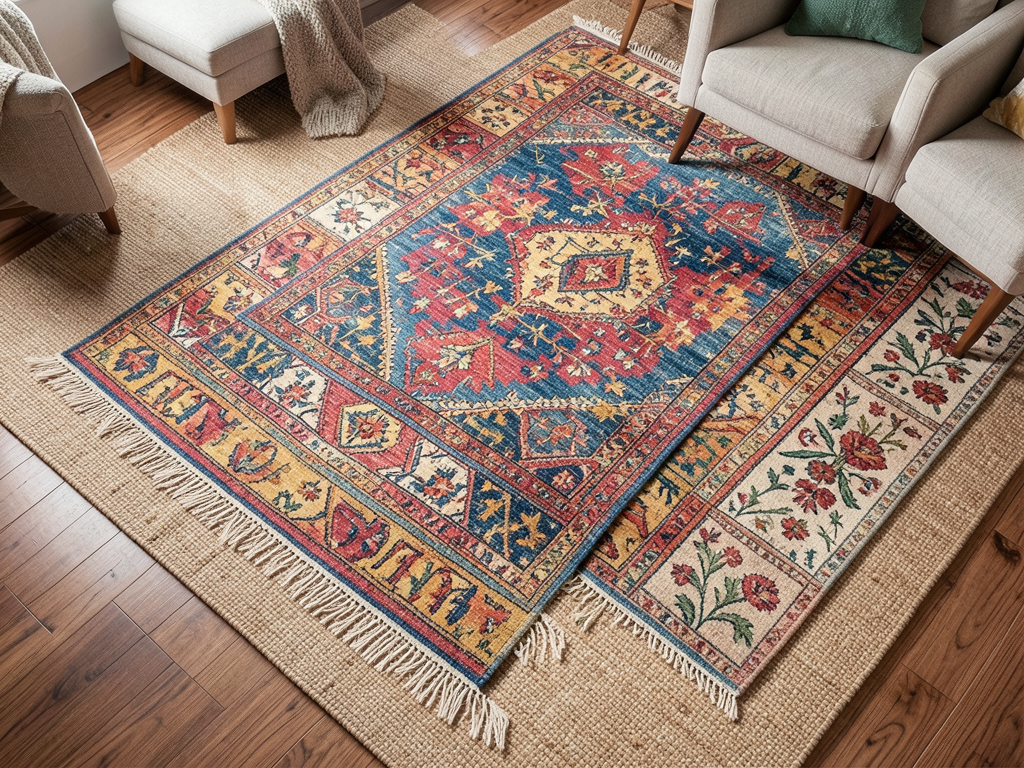
10. Layer Your Rugs
A single rug works well. Yet when you place two or three on top of one another, things shift. It becomes something bolder. Not just function, but expression. Layering changes the feel entirely.
How to layer:
- A large neutral carpet sets the scene first thing. Then comes placement – right underfoot before anything else arrives.
- A tilted, small-patterned rug can go over the top one.
- Fashion breaks rules when stripes meet florals. The mismatch makes it work. Clashing prints catch attention because they surprise.
- Leave parts bare. Let gaps stay open between pieces.
Here is a neat idea about color. When patterns clash wildly, pick two matching shades across all rugs instead. That small detail ties everything into one frame. Surprisingly, it works every time.
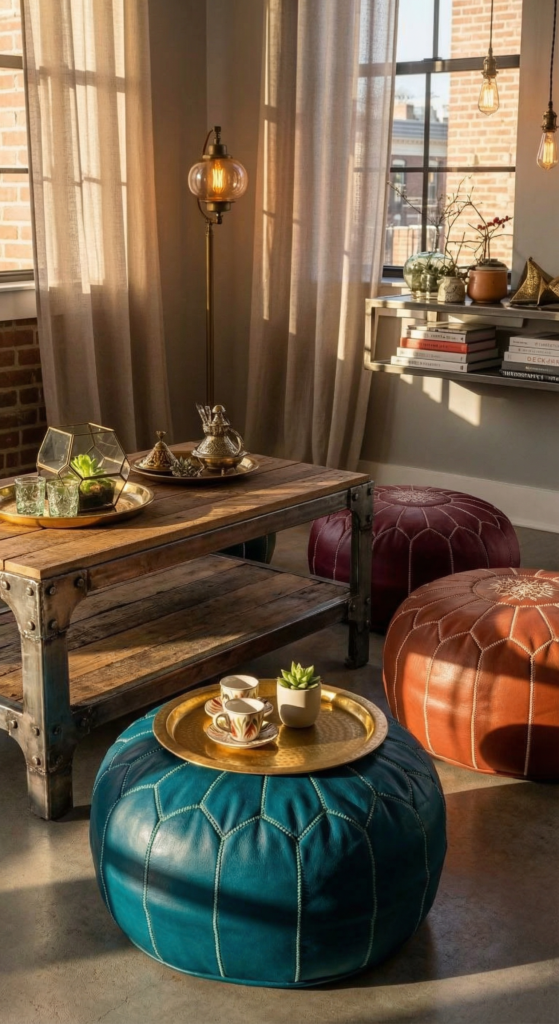
11. Balance Gentle and Firm
A few soft leather poufs sitting near a tough metal coffee table? Odd pairing – yet somehow it fits.
Make it happen:
- Pick two or three poufs, maybe go bold with deep blue or something like burgundy. Try mixing shades for a look that holds attention without trying too hard.
- Arrange these near a wooden or metallic coffee table.
- Place the table close to the ground. Make it basic.
- A small table can sit right on top of those soft footrests whenever something steady is needed.
What gives it appeal? Soft leather beside cold metal sharpens how each feels. That mix pulls attention, makes texture matter more.
12. Mix Time Periods
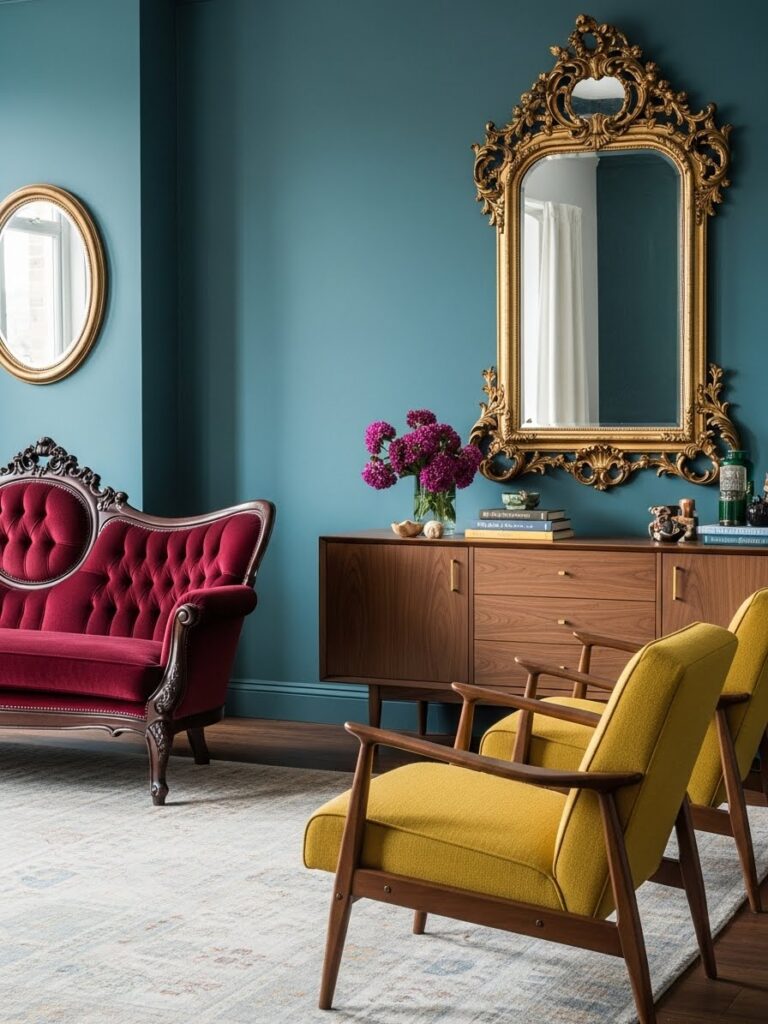
Furniture from your great-grandmother fits right alongside pieces bought at IKEA. Believe it or not.
Combine these:
- Ornate antique furnishings paired beside clean-lined contemporary designs.
- Deep wine red pairs well with aged forest tones. Mustard yellow brings out the warmth in those older shades. Teal slips in quietly, adding a soft contrast. Dark greens anchor everything without shouting.
- Curved glass frames sit above straight-edged floating ledges.
Here’s something worth noting. Combining wildly different looks? Best to limit yourself to just three shades. That way, things stay clear instead of turning chaotic. Oddly enough, restraint helps more than you’d think.
13. Cover a Wall With Mirrors
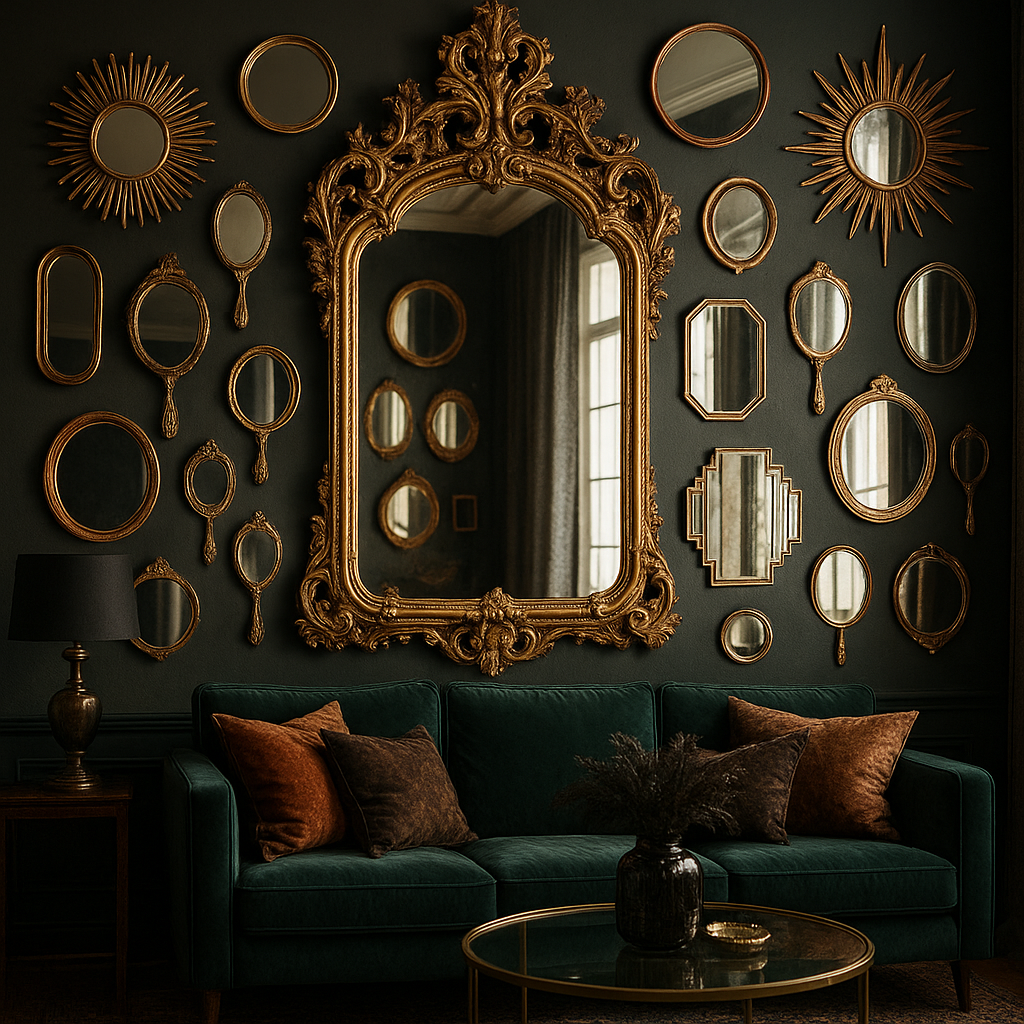
Who needs just a single mirror if fifteen fit better?
Create the look:
- Start with one big mirror.
- Place mirrors of various shapes nearby – round ones here, squares there, maybe a sunburst if you like. Some could hang high, others sit low, each catching light in its own way. Try mixing styles until the space feels balanced, not crowded.
- Start with a golden edge, then bring in silver alongside it. Copper joins next, tying the three together.
- Slightly shift one over the next.
Opposite the window works best. Light bounces off the mirrored surface, opening up the space. The room seems wider when the brightness spreads that way.
14. Add Copper Accents Throughout
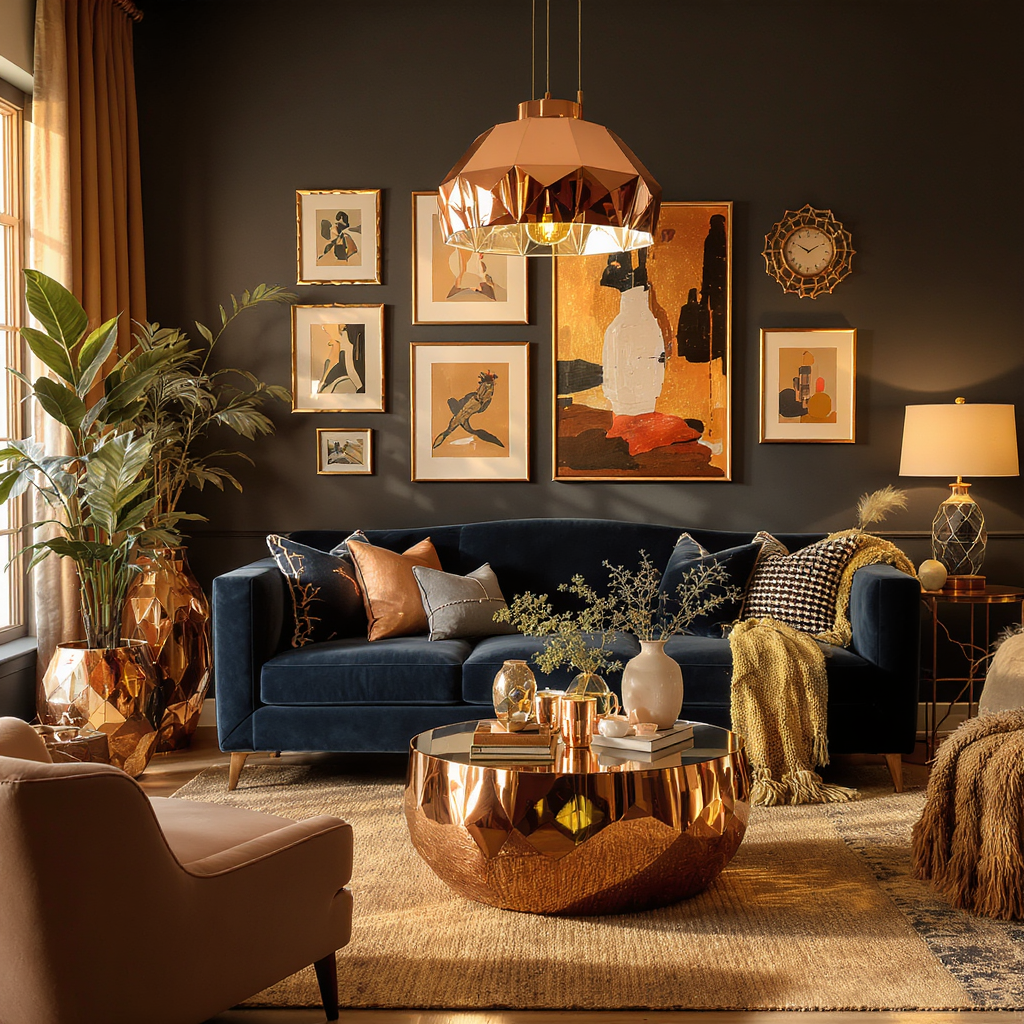
Warm like a sunlit wall, copper fits any setting. It pairs easily, much like old friends meeting again.
Spread it around:
- Try picking up a few copper plant pots sometime soon.
- A single copper lamp might do. Another could sit near the window.
- Use copper picture frames.
- Copper threads woven into bedding might be worth considering.
A sudden shift works best when you mix copper with something calm, like navy or gray. Without that contrast, warmth takes over completely.
15. If You Have Exposed Brick, Let It Be Seen
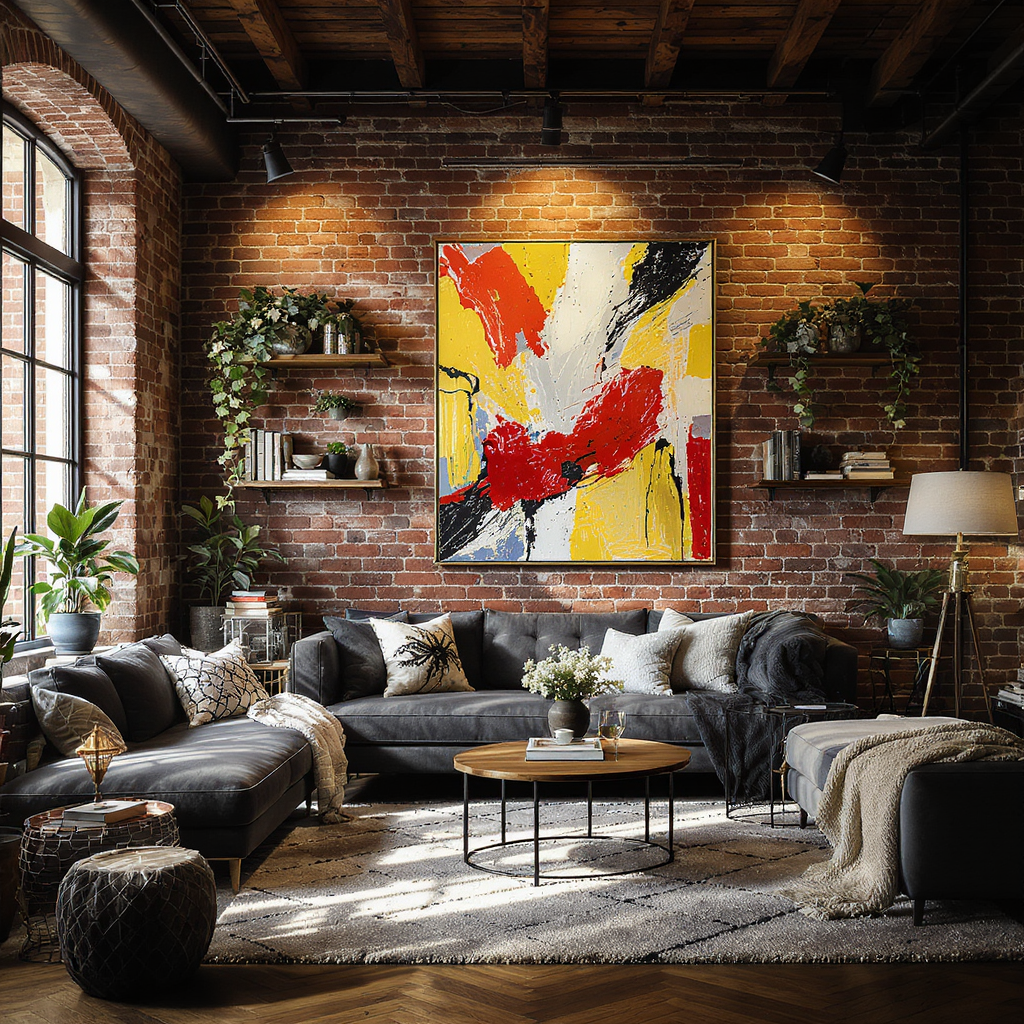
Bare brick tells a building’s story. Leave it where people can see.
Style it:
- Beyond a single shelf, more can hold your things. Floating ones give space without blocking walls.
- A bold piece stands out when placed on a brick wall. The texture behind gives it room to breathe.
- Shine a light toward the bricks so their surface stands out. From there, shadows start to define each ridge and dip. That glow picks up every bump in the material. Where brightness hits, depth becomes clear. A single beam can reveal what flat lighting hides.
- Tucked beside it, a few climbing plants will ease those sharp lines. Their upward reach brings a gentle flow where structure stands stiff. A vine here, a tendril there – suddenly corners feel less rigid. Softness grows where green meets gray.
Breathe around it – leave gaps between the piece and the wall. That small space lets each stand out on its own.
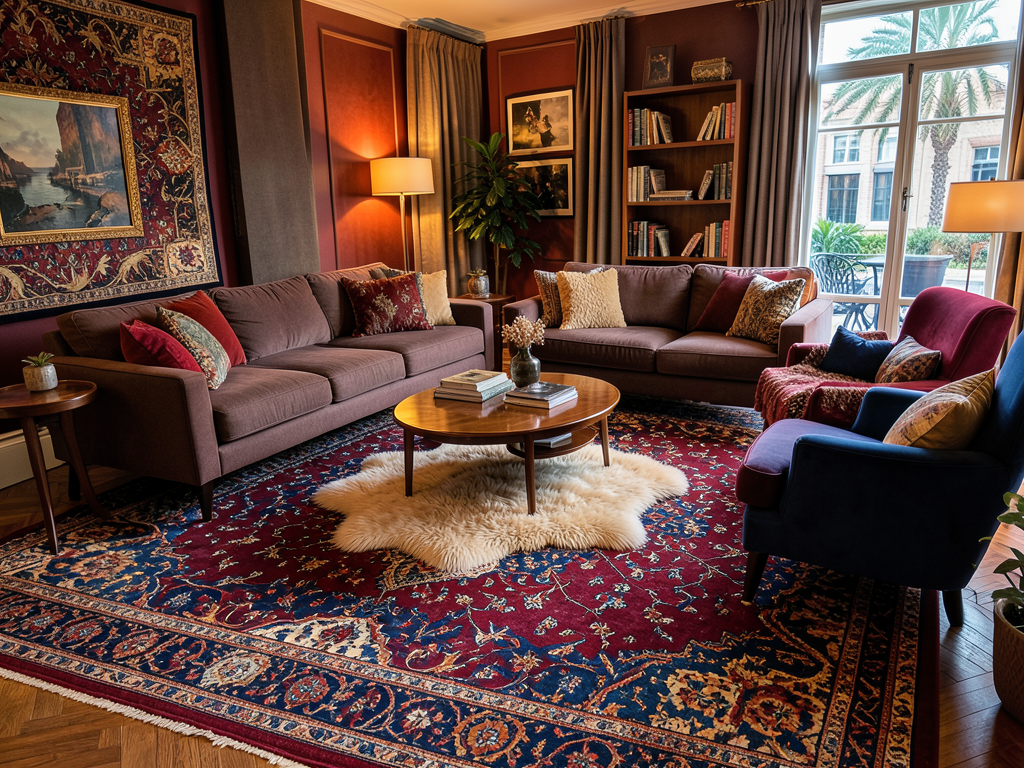
16. Let a Persian Rug Unite the Space
A well-made Persian carpet speaks where your chairs and tables do not agree. Somehow, it pulls the whole room into balance.
Use it right:
- Bold shades work well when chosen carefully. Deep tones add depth without trying too hard.
- Start by letting the hues in your rug point toward which tones work best around it. The shades found there can lead straight into choosing extras that fit just right. Pick accents based on those threads woven through the fabric underfoot. What shows up in the weave might suggest exactly what else belongs nearby. Colors already present could quietly name their partners elsewhere in space.
- A bit to one side works better. The exact center feels forced.
- Place a sleek sofa here to break up the old look.
Here is a curious thing about rugs. When the design fills every inch with swirls or shapes, odd chairs or tables nearby seem to belong. It is not clear why, but clutter on the floor covers flaws in what sits above. Busy threads act like noise that hides missteps. Odd colors in a couch go unnoticed when the ground pulses below. Complexity becomes camouflage. Things just fit, even if they should not.
17. Old Trunk Becomes Coffee Table
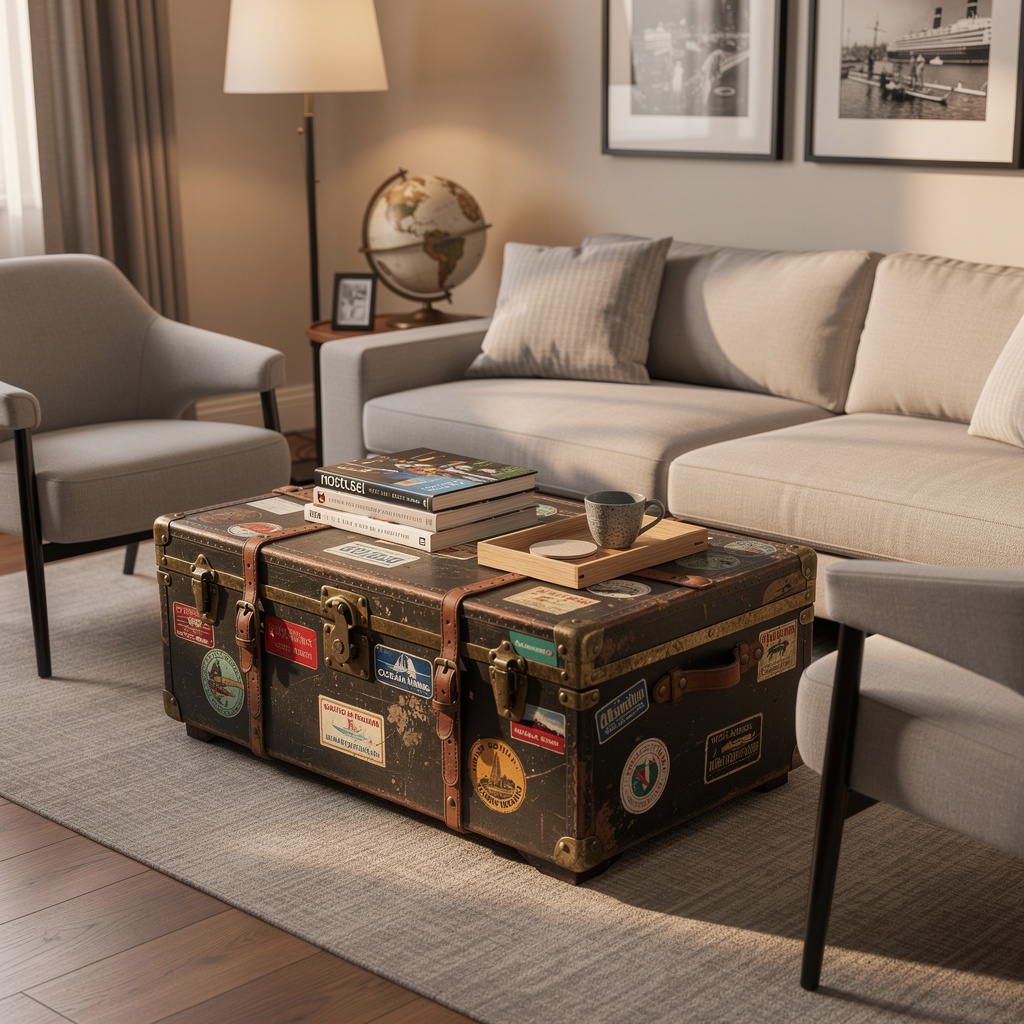
A worn old chest might catch your eye, yet holds plenty of everyday use too. It keeps things out of sight while adding character where it stands.
Make it work:
- Check for vintage luggage tags, worn leather ties. The more history it shows, the stronger its charm feels. Old details give depth you won’t find elsewhere.
- Pile a few books up there instead.
- Store blankets or games inside.
- Sitting nearby could be a sleek bench. A chair with clean lines might work too.
A height of around sixteen to eighteen inches works best – makes grabbing your drink easier. Reaching too far gets annoying fast. That range puts the cup right where fingers meet comfort.
18. Style a Bar Cart
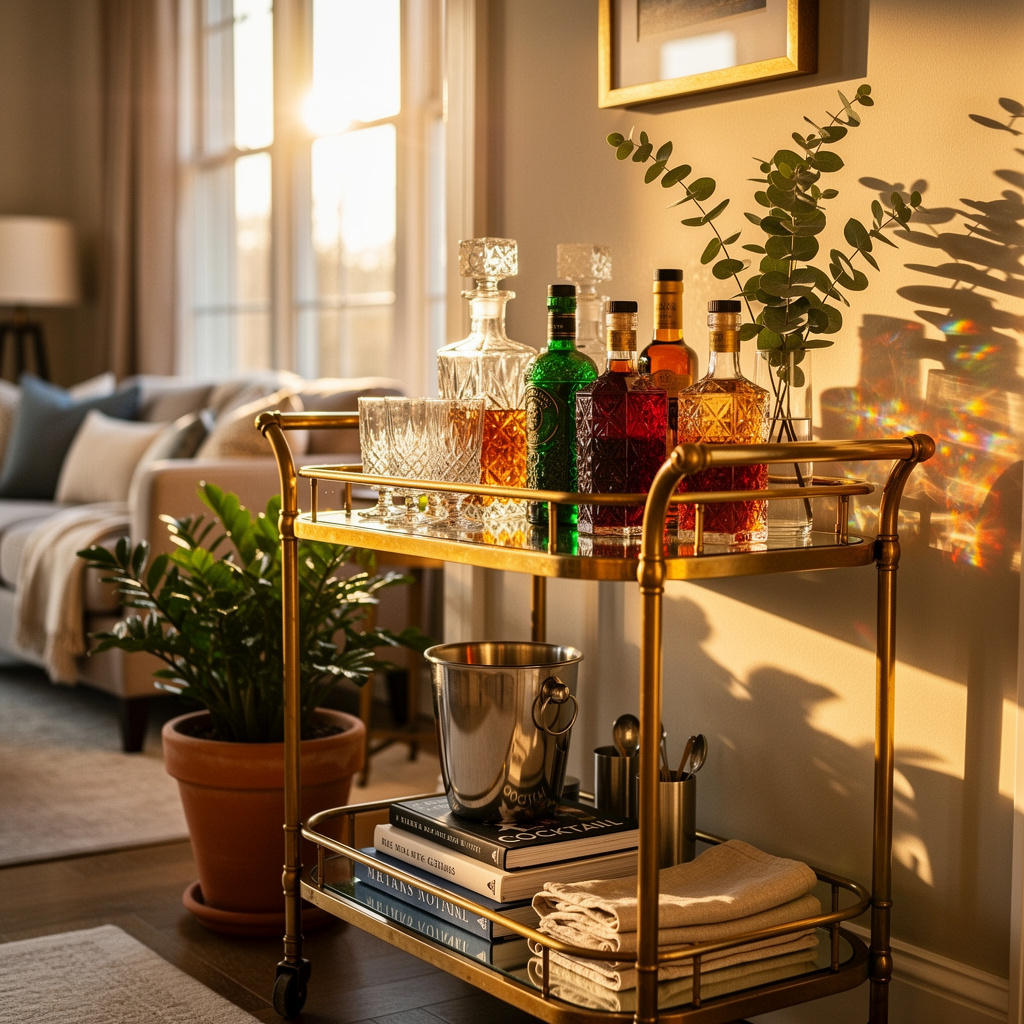
Out pops a retro drinks trolley, and suddenly the lounge looks dressed up.
Fill it up:
- Last up there: clear jars next to shiny tumblers.
- Try placing a few leaves inside. Or maybe toss in old blossoms that lost their color.
- A few drink guides sit low, near a stack of paper towels. Books rest down there along with folded squares meant for spills.
- Let the morning sun hit the metal through the glass pane. Position matters when brightness brings out its glow. Near that frame works best. Light bounces well off smooth surfaces angled just right.
A touch of soil changes everything – try a green leaf in terracotta close by. That way, the space stays grounded instead of tipping into showiness.
19. Hang Macramé for Softness
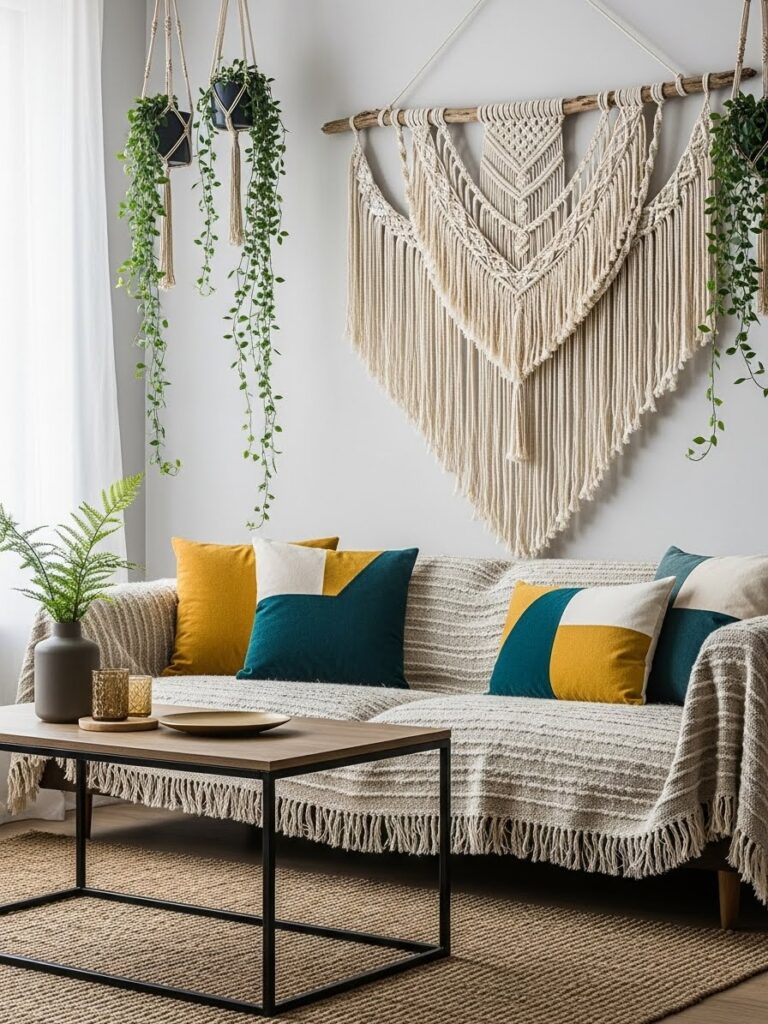
A touch of woven thread eases the sharp edges where solid wood meets strong colors. Soft loops hang like quiet thoughts amid sturdy legs and loud statements.
Do it right:
- A large space needs a bold knotwork. Small hanging crafts seem lost.
- Choose shades found in raw cotton. Not dyed, just how it grows.
- Suspended just over the sofa, it fits right there.
- Close by, place some greenery. Nearby, set a few pots. A little to the side, add living leaves.
Try adding sharp-edged cushions or a smooth surface console nearby. That way, the space holds its shape without tipping into free-spirited clutter.
20. Share What You Found at the Thrift Store
Flea markets often hide the real treasures. Thrift store shelves sometimes hold what you need most.
Show them off:
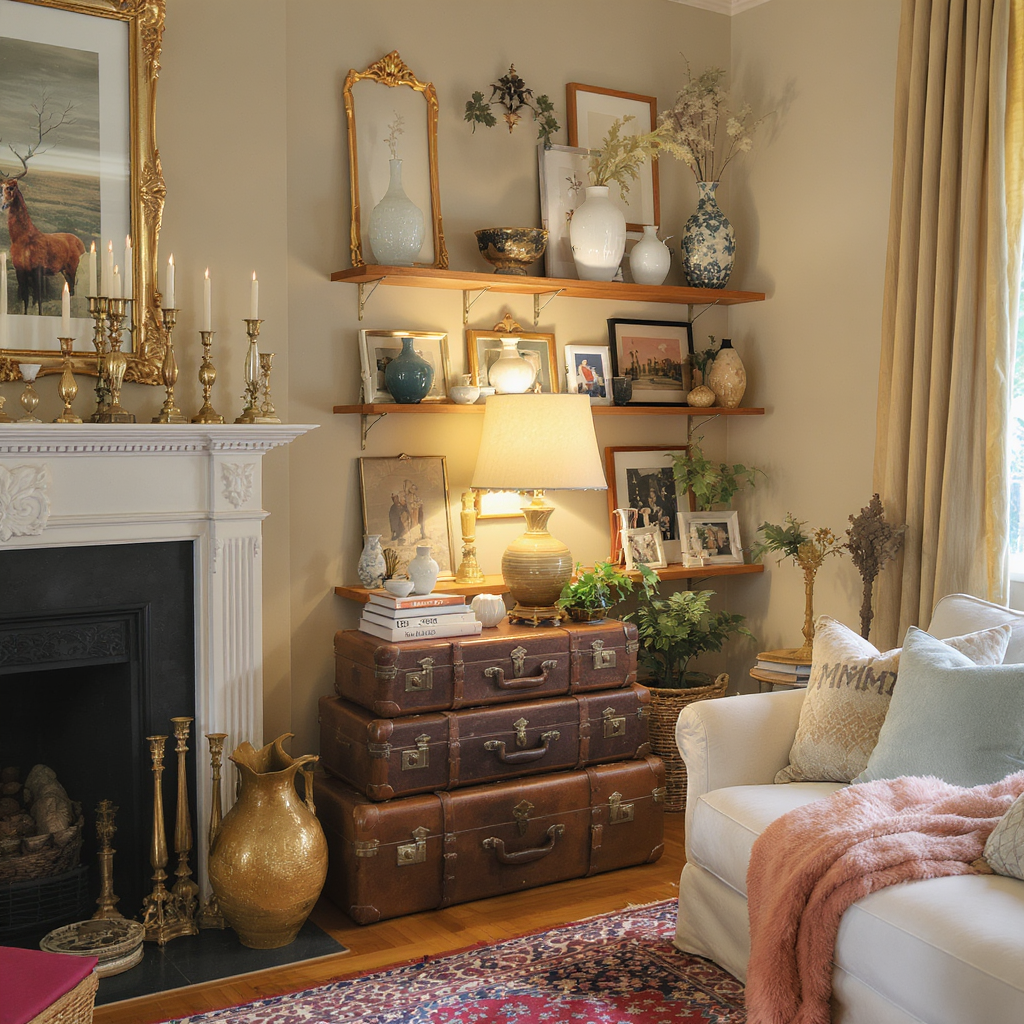
- Beside the fireplace, place those aged brass holders in a row.
- Pile up worn suitcases, stack them into a bedside stand.
- Group mismatched vases together.
- Frames from secondhand shops work well when paired with fresh artwork.
Space out your items by threes. That setup feels deliberate, not messy. Try it like that.
21. Create an Ottoman Corner
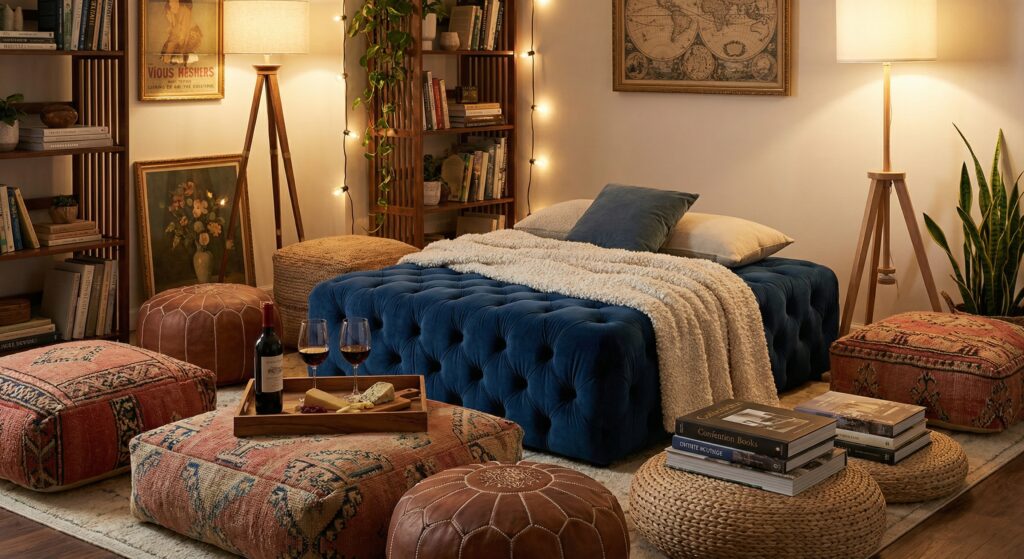
A tucked-away nook can feel warm without trying too hard. That quiet corner? It might just become your favorite place to sit. With one good pillow and soft light, emptiness turns gentle. A secondhand chair finds new life near the window. Blankets appear. The space breathes differently now. Not fixed up – just noticed.
Build it:
- A single large footrest, either covered in soft fabric or smooth animal hide.
- Add smaller poufs.
- Spread a cover over the largest of them.
- Place books one above another on a level footrest.
Picture a scene where things rise and dip, uneven but natural. Gaps appear here and there, like open ground between rises. Heights change slowly, one after another. Not everything lines up flat. Spaces matter just as much as what fills them.
22. Add Reclaimed Wood Beams
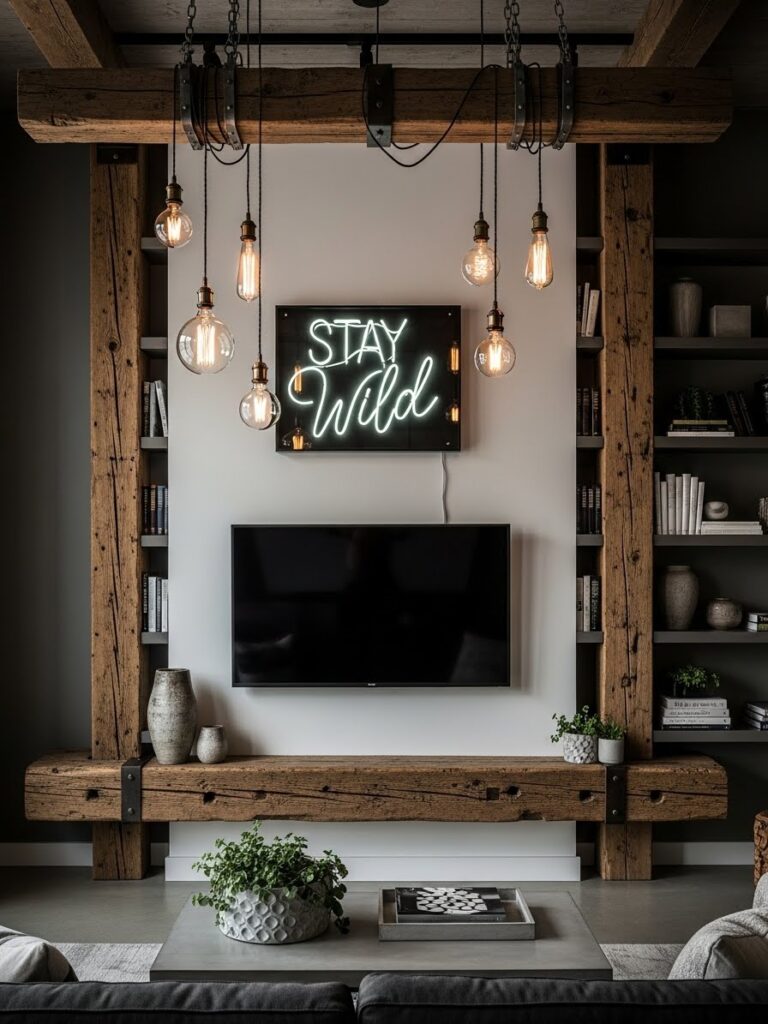
Weathered timber rafters bring charm right away.
Use them:
- Above your television, fix a shelf in place.
- Suspended from above, those vintage-style lights dangle where the wood crosses the room’s edge. Their warm glow settles unevenly across the floor below.
- Let those old nail holes show. That’s what makes it real.
- Try pairing it with a sleek metal frame instead.
Hold back a little. Just one beam works. Two might still be okay. Anything past that feels forced.
23. Collect Different Lamps
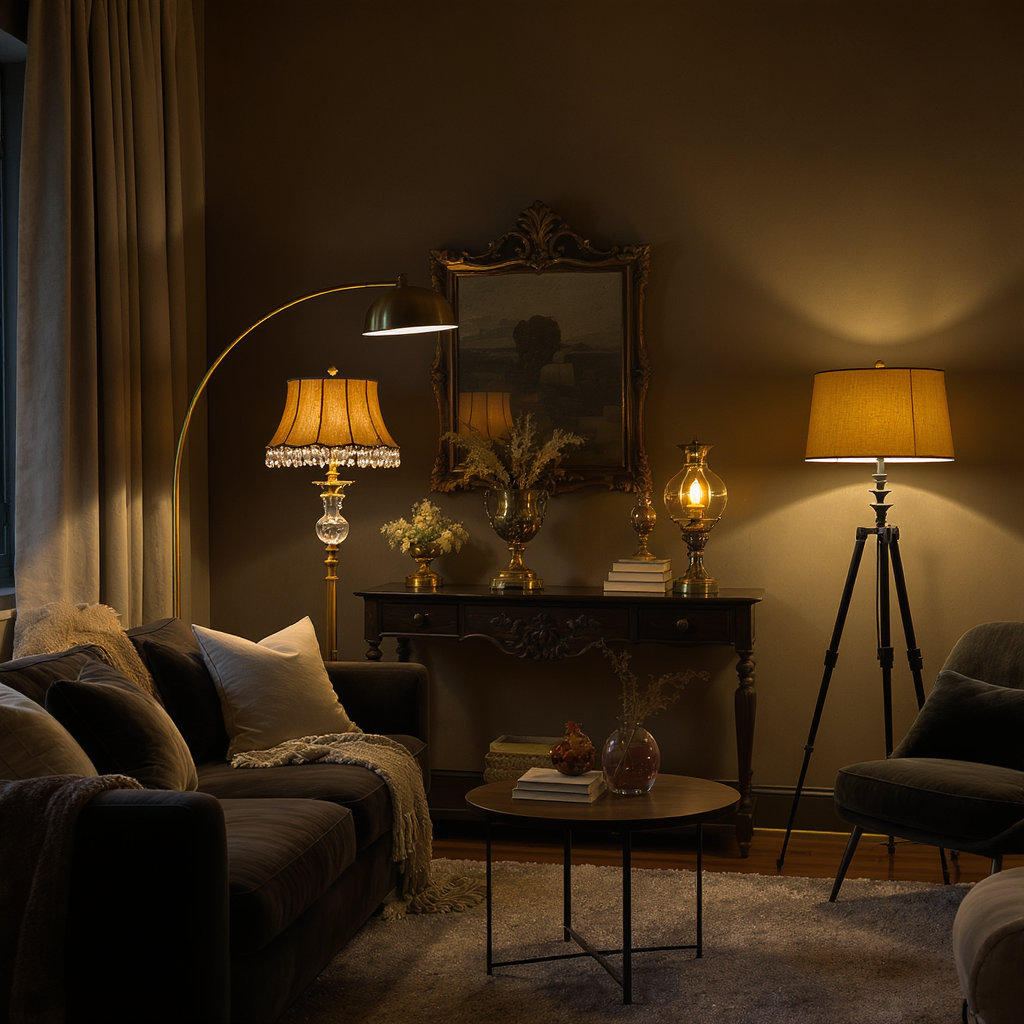
Who says everything needs to go together? Try something different instead.
Build your collection:
- Mix old and new lamps.
- Different heights in different corners.
- A shared detail ties it together – maybe every piece has brass bits. Or perhaps the dark tones match throughout. One consistent thread makes things feel connected, like a quiet agreement between objects.
Here’s a tip you might not expect: pick one shade of warm white for every bulb. That way, the glow stays consistent across different fixtures. Even if the lamp styles clash, the lighting feels unified. Surprisingly, it’s the small things like this that make a room come together.
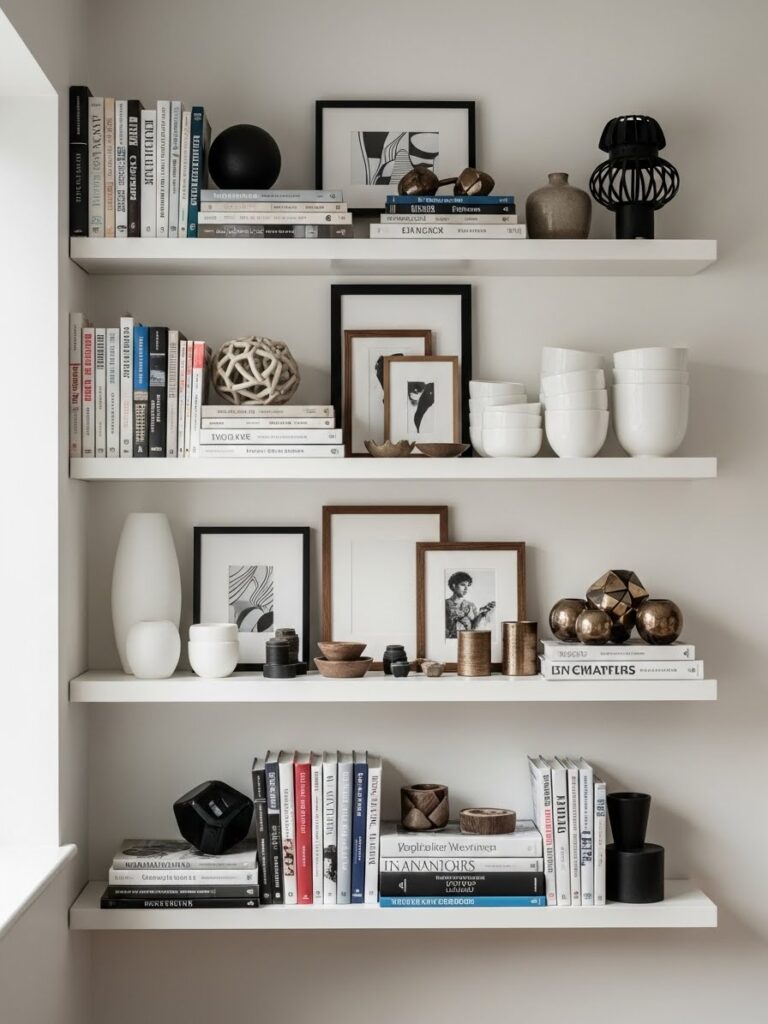
24. Install Floating Shelves
Now here’s a thought – those wall-mounted ledges make shifting things around feel effortless. One day books, next day plants, just like that.
Style them:
- Mix books with decorative objects.
- A frame rests, tilted, on the surface behind it.
- Small items go before large ones.
- Empty spots matter. Gaps give room to breathe. Sometimes less fills more than crowded corners ever could.
A lopsided layout often feels right – weight piled here, space stretched there. One side busier, the opposite calmer. Balance without matching. Nature rarely copies itself exactly.
25. Create a Conversation Zone
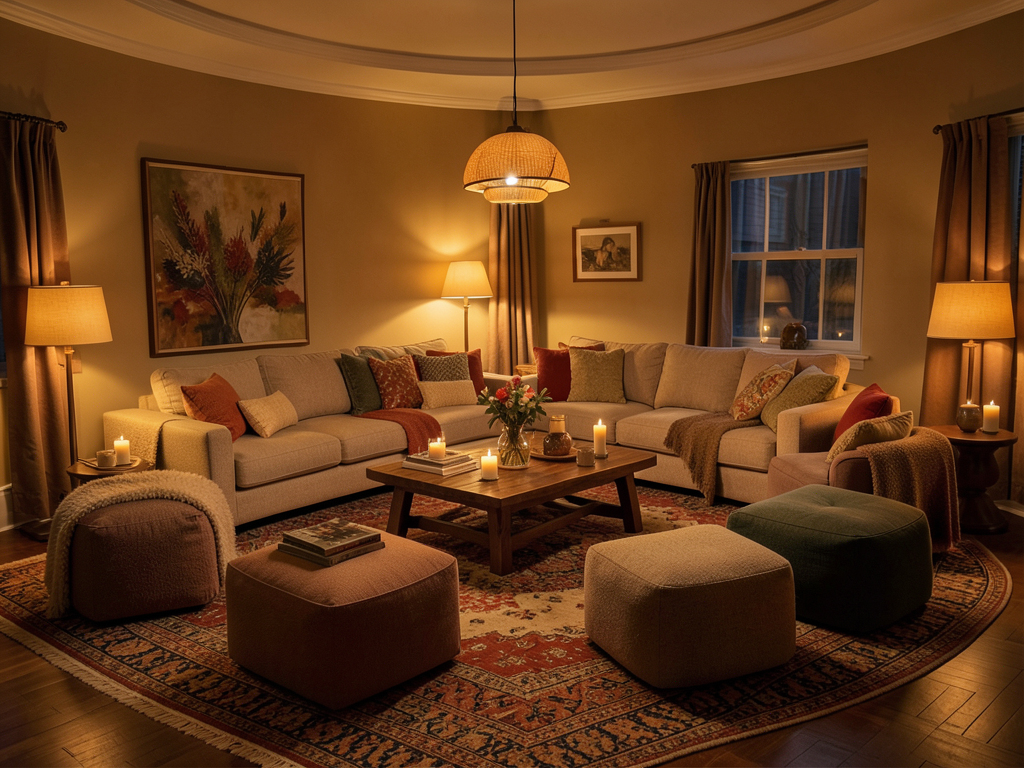
A spot that feels warm might invite folks to pause. Sitting there could seem natural, like staying awhile makes sense. Conversation may start without effort, just by being present. People often linger when comfort meets quiet charm.
Set it up:
- Sit everyone in a ring roughly ten to twelve feet wide. Shape it like a loop so people face one another naturally. Spread chairs evenly around the curve. Leave space between each seat just enough to walk through. Stay within that span – no wider than twelve feet at most.
- Layer rugs underneath.
- A few small tables nearby help. Reachable surfaces make things easier. Close spots hold what you need.
- Muted light spills from a lamp tucked in the corner. A candle flickers near the window ledge.
- Slide-in ottomans that shift when needed.
Sitting near each other makes conversation easier. Distance often leads to shouting, but closeness invites real chat. Proximity shifts how voices are used – lower tones replace loud calls. People lean in when the space shrinks between them. That small gap encourages quieter words to flow.
The Real Secret
Truth is, eclectic style skips strict guidelines. What matters? Pair pieces you truly enjoy – see that quiet link between them. That connection holds it together.
Whatever that thread is – color, fabric, mood – it doesn’t matter. What counts is picking pieces you truly enjoy, not what feels expected. That honesty shows. The space ends up feeling real.
What separates messy from eclectic? Purpose. When two items sit side by side because you say so – simply because they speak to you – that reason holds weight. It doesn’t need polishing. A feeling can be foundation enough.
Your space ought to carry your fingerprints, not match a magazine spread. Forget copying that curated image from online somewhere. It needs to show where you have been, what stuck with you along the way. Objects gathered slowly, chosen because they mean something. A place that breathes familiarity, shaped by moments lived.
Right then, set that sleek floor light beside your grandmother’s favorite seat. Overlap rugs others would call mismatched. Combine prints without permission. Ignore what they say is proper. Shape the space like you mean it.